AAASME North Africa Regional VP, Dr. Atef Al-Shabrawi, Highlights Lessons in Strategic Planning from France’s Industrial Decline
Renowned entrepreneurship and innovation expert examines how industrial policy decisions, declining manufacturing capacity, and short-term economic strategies can threaten long-term economic sovereignty.
The future of economic development depends not only on innovation and investment but also on the strategic decisions nations make to preserve their industrial capabilities.
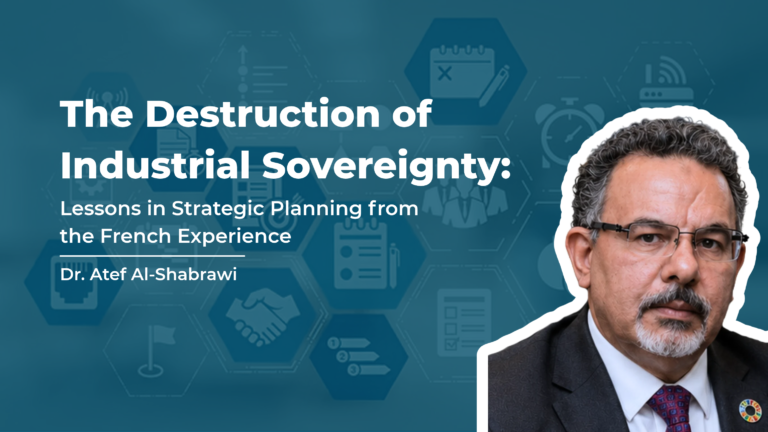
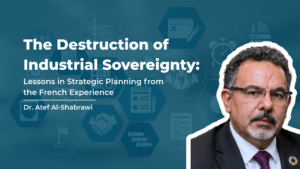
This is the central message of a thought-provoking article by Dr. Atef Al-Shabrawi, Regional Vice President for North Africa at the African Association of Small and Medium Enterprises (AAASME), published on October 6, 2026, in Rowad Al Aamal (Entrepreneurs Magazine), an Arabic-language business publication.
In the article titled “The Destruction of Industrial Sovereignty: Lessons in Strategic Planning from the French Experience,” Dr. Al-Shabrawi examines France’s industrial transformation, offering important insights into economic sustainability, institutional planning, and the dangers of prioritising short-term financial gains over long-term productive capacity.
France’s Industrial Decline: A Lesson for Emerging Economies
Once recognised as one of Europe’s leading industrial powers, France has experienced a significant decline in manufacturing’s contribution to its national economy.
Dr. Al-Shabrawi highlights how the country’s growing dependence on services and imported products reflects decades of policy choices, structural economic changes, and strategic assumptions that ultimately weakened its industrial foundation.
According to figures presented in his analysis, industry’s contribution to France’s Gross Domestic Product declined from approximately 30.8% in 1961 to 16.5% in 2025.
He argues that this transformation was not the result of a single economic crisis but rather an accumulation of decisions whose long-term consequences became increasingly apparent.
The Alcatel Experience: When Innovation Loses Its Manufacturing Foundation
One of the most compelling examples explored in Dr. Al-Shabrawi’s article is the decline of Alcatel, formerly a major player in European telecommunications technology.
The company adopted a manufacturing-light business strategy, selling factories and reducing its direct involvement in production.
Following its merger with American telecommunications company Lucent in 2006, Alcatel-Lucent encountered financial difficulties before eventually being acquired by Finland’s Nokia in 2016.
For Dr. Al-Shabrawi, the experience demonstrates the risks associated with separating technological research and innovation from the industrial infrastructure required to translate knowledge into sustainable economic value.
His analysis emphasises the importance of maintaining productive capabilities alongside technological advancement.
What Africa’s SMEs Can Learn from the French Experience
Although Dr. Al-Shabrawi’s analysis focuses on France, its lessons carry particular relevance for Africa’s evolving industrial and entrepreneurial landscape.
Across the continent, small and medium enterprises play a crucial role in manufacturing, job creation, innovation, and economic diversification. However, their long-term competitiveness depends on an enabling environment that encourages local production, technological development, and sustainable investment.
The article reinforces several priorities that resonate with AAASME’s broader advocacy for African enterprise development: strengthening domestic manufacturing, connecting research with industrial production, encouraging patient capital, and adopting policies that protect productive businesses against unequal international competition.
For African economies seeking greater economic independence, the French experience offers a reminder that industrial capacity is not merely a component of economic growth but an important foundation for resilience and long-term competitiveness.
Dr. Atef Al-Shabrawi: Bringing Expertise to Africa’s SME Development Agenda
Beyond his leadership role as AAASME Regional Vice President for North Africa, Dr. Atef Al-Shabrawi brings experience in entrepreneurship, innovation, and economic development.
He is identified as a Professor of Entrepreneurship and Innovation at the Egypt-Japan University of Science and Technology. His published professional profile also highlights his previous position as Chief Executive Officer of Bahrain’s Family Bank and his work in social innovation.
Through his research, professional experience, and published commentary, Dr. Al-Shabrawi contributes to discussions on the relationship between entrepreneurship, strategic investment, industrial development, and economic transformation.
His latest analysis further demonstrates the value of expert perspectives within AAASME’s continental leadership structure, particularly as the association continues advocating for a more resilient, competitive, and economically empowered African SME ecosystem.
Advancing the Conversation on Africa’s Economic Future
For AAASME, the issues raised in Dr. Al-Shabrawi’s article connect with the association’s commitment to strengthening Africa’s productive economy and promoting sustainable enterprise development.
As African nations pursue industrialisation and greater participation in global value chains, strategic planning must extend beyond immediate economic performance to consider long-term industrial competitiveness, technological independence, and the survival of locally owned businesses.
Dr. Al-Shabrawi’s examination of the French experience provides a valuable perspective for policymakers, investors, entrepreneurs, and SME development institutions seeking to avoid similar structural vulnerabilities.
His contribution also underscores the importance of knowledge sharing and informed economic leadership in shaping Africa’s industrial future.
Read Dr. Al-Shabrawi’s Full Article
For a deeper understanding of the French industrial experience and its lessons for strategic economic planning, readers are encouraged to explore Dr. Atef Al-Shabrawi’s original article, published in Arabic by Rowad Al Aamal on October 6, 2026.