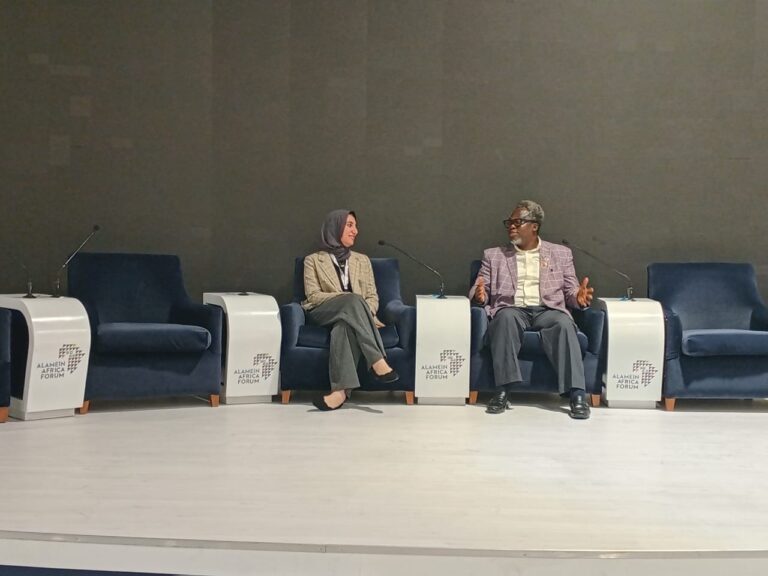
The call comes against the backdrop of the inaugural Alamein Africa Forum, held in New Alamein, Egypt, from October 2–4, 2026, where African political leaders, investors, development institutions and business executives gathered to discuss the continent’s economic transformation.
The forum, jointly convened by the Government of Egypt, African Union, African Union Development Agency (AUDA-NEPAD) and African Export-Import Bank (Afreximbank), highlighted the urgent need to translate Africa’s economic ambitions into tangible investments, industrial capacity, employment opportunities and sustainable development.
For AAASME, these discussions reinforce a fundamental concern: Africa cannot achieve meaningful economic transformation without deliberately investing in the millions of small and medium enterprises that sustain its economies.
Beyond Declarations: Africa’s Institutions Must Deliver Tangible Results
One of the strongest messages emerging from the Alamein Africa Forum was the need to shift attention from policy formulation to implementation.
African Union Commission Chairperson, H.E. Mahmoud Ali Youssouf, emphasised that Africa already possesses the vision, resources, institutions and markets required for economic transformation. The challenge, he noted, lies in translating these advantages into properly financed and successfully implemented projects.
Similarly, AUDA-NEPAD Chief Executive Officer, Nardos Bekele-Thomas, stressed that Africa’s development challenge is not a shortage of conferences or ambitious declarations, but insufficient implementation, investment transactions and concrete economic outcomes.
AAASME believes these observations must trigger a fundamental reassessment of how African institutions engage with the continent’s SME ecosystem.
While continental initiatives such as Agenda 2063 and the African Continental Free Trade Area (AfCFTA) offer significant opportunities, their success must ultimately be measured by the extent to which ordinary African entrepreneurs can access affordable financing, expand production, enter new markets and create sustainable employment.
The Association is therefore advocating a more coordinated approach involving the African Union, AUDA-NEPAD, Afreximbank, African Development Bank, regional economic communities and national governments to ensure that SME development becomes a central pillar of Africa’s economic integration agenda.
Dangote’s Industrialisation Message Reinforces the Need to Empower African SMEs
One of the most significant contributions at the forum came from Nigerian industrialist and President of Dangote Group, Aliko Dangote, who challenged African leaders to reconsider how economic progress is measured.
Dangote argued that economic growth should not be assessed solely through rising Gross Domestic Product (GDP), but through the continent’s productive capacity, job creation, domestic value addition and economic resilience.
He further emphasised the need for African countries to reduce their dependence on raw-material exports and invest more aggressively in local processing, manufacturing and industrial development.
According to Dangote, the AfCFTA must be viewed not merely as a trade agreement but as essential economic infrastructure capable of creating the market scale required to attract investment and accelerate industrialisation.
For AAASME, Dangote’s position highlights why the development of Africa’s SME ecosystem must receive greater institutional attention.
Large industrial investments are essential, but equally important are the thousands of smaller enterprises operating across manufacturing, agriculture, logistics, technology, processing, distribution and other productive sectors.
These businesses represent potential suppliers, distributors, service providers and value-chain partners for Africa’s expanding industrial base.
Without access to affordable capital, modern technology, infrastructure and regional markets, however, many African SMEs will remain unable to participate meaningfully in the industrial transformation envisioned by continental leaders.
Africa’s industrialisation agenda must therefore be designed not only around building large industries, but also around developing the smaller enterprises that sustain industrial value chains.

UBUNTUSUSU: A Continental Financing Solution for Africa’s SME Ecosystem
Against this background, AAASME is drawing renewed attention to the UBUNTUSUSU Continental SME Fund, a proposed $1.4 billion financing initiative designed to address persistent funding challenges facing African entrepreneurs.
The initiative, championed by AAASME, draws inspiration from Africa’s traditional culture of collective savings, shared prosperity and community-based financial cooperation.
Unveiled through a collaborative initiative involving AAASME, the Securities and Exchange Commission (SEC) and the Africa India Chamber of Commerce and Industry (AICCI), UBUNTUSUSU seeks to mobilise financial resources to support SME expansion, improve access to capital and strengthen intra-African trade.
The Fund represents an African-centred approach to addressing one of the continent’s most persistent economic challenges: the inability of promising small businesses to secure the financing required to grow and compete.
AAASME believes that initiatives such as UBUNTUSUSU deserve stronger institutional engagement, strategic partnerships and financial support from African governments, regional development institutions and private-sector stakeholders.
Rather than relying exclusively on conventional financing models that often exclude smaller businesses, the Association advocates innovative and inclusive funding mechanisms capable of mobilising African resources for African enterprises.
Supporting the development and operationalisation of UBUNTUSUSU would provide an opportunity for continental institutions to demonstrate practical commitment to SME empowerment and African economic self-reliance.
Making AfCFTA Work for the Small Business Owner
Another major outcome of the Alamein Africa Forum was the renewed emphasis on removing barriers to intra-African trade.
Discussions highlighted the importance of harmonising regulations, improving cross-border payment systems, strengthening logistics networks and developing regional value chains.
Egyptian President Abdel Fattah El-Sisi also drew attention to the information gaps preventing African businesses from identifying commercial opportunities within neighbouring countries.
For AAASME, these challenges are particularly significant for SMEs, many of which lack the financial resources and institutional support necessary to navigate complex cross-border trading environments.
The Association maintains that the success of AfCFTA must extend beyond agreements between governments and large corporations.
It must create genuine commercial opportunities for African manufacturers, farmers, processors, traders, technology innovators and emerging entrepreneurs.
AAASME is consequently calling for greater investment in SME-focused trade facilitation, affordable cross-border financing, business development support and market-access programmes.
Through initiatives such as UBUNTUSUSU, African institutions have an opportunity to connect access to finance with the broader objectives of continental trade integration.
A Call for Stronger Collaboration and Institutional Accountability
AAASME recognises the efforts already being made by the African Union and other continental institutions to promote entrepreneurship and SME development.
The African Union’s SME Strategy and its annual MSME Forum, for example, provide frameworks for advancing affordable financing, digital transformation and market access.
However, the Association believes that existing efforts must be matched by more substantial financing commitments, measurable outcomes and sustained engagement with organisations working directly within Africa’s SME ecosystem.
AAASME is advocating five priority areas for stronger institutional collaboration:
- Increased access to SME financing: Mobilising development capital, guarantees and innovative financial instruments that respond to the realities of African small businesses.
- Institutional support for UBUNTUSUSU: Exploring strategic partnerships, technical assistance and appropriate investment frameworks to advance the Continental SME Fund.
- Greater SME participation in AfCFTA: Removing trade barriers and developing practical mechanisms that allow smaller businesses to benefit from the continental market.
- Industrial value-chain integration: Creating opportunities for SMEs to participate in manufacturing, agriculture, healthcare, energy and other strategic sectors.
- Accountability and measurable implementation: Ensuring that continental SME development commitments translate into accessible programmes, financed enterprises, increased productivity and sustainable jobs.
These priorities reflect AAASME’s conviction that the future of Africa’s economy must be built on a strong, competitive and financially empowered private sector.
From Continental Ambition to Grassroots Economic Transformation
The inaugural Alamein Africa Forum has once again demonstrated that Africa possesses the resources, entrepreneurial talent and institutional capacity required to drive its own economic transformation.
However, the real test of continental leadership will be whether the commitments emerging from such gatherings translate into tangible improvements in the lives and businesses of African entrepreneurs.
For AAASME, empowering SMEs is not simply a social or economic development objective. It is a strategic requirement for industrialisation, employment generation, regional integration and long-term economic sovereignty.
The Association therefore urges the African Union, AUDA-NEPAD, Afreximbank, African Development Bank and other pan-African institutions to deepen their engagement with SME-focused organisations and support practical financing initiatives capable of unlocking the continent’s entrepreneurial potential.
UBUNTUSUSU Continental SME Fund presents one such opportunity for African institutions to move from commitments to collective action.
As Africa continues its pursuit of economic independence and shared prosperity, AAASME maintains that the continent’s development agenda must place its small and medium enterprises at the centre of implementation.
The message is clear: Africa must move beyond discussing SME empowerment to financing it, institutionalising it and delivering measurable results.
The time has come for African institutions to match their continental ambitions with stronger commitments to the entrepreneurs who will ultimately drive Africa’s economic future.
Reference and Further Reading
Original Article: 5 Big Business Takeaways from the Inaugural Alamein Africa Forum — Business Insider Africa.
Additional Reference: Inaugural Alamein Africa Forum: Powerful Call to Move Africa from Ambition to Implementation — African Union.